March 15, 2014 (WASHINGTON) – A Sudanese-born torture survivor has called on US president Barack Obama calling to reconsider his administration’s policy on Sudan in light of the recent escalation in violence in Darfur.
There are calls for US president Barack Obama to reconsider his government’s policy on Sudan following a fresh wave of violence in Darfur (Photo: TJ Kirkpatrick/Corbis)
In the latest letter in a series sent to the US government to highlight ongoing atrocities in Sudan and call for change, human rights activist Mohamed Elgadi said the current US policy on Sudan is heading in the wrong direction, saying it should be should be based on a broad political solution that addresses the underlying roots of conflicts in the country.
Elgadi said US policy toward Sudan should be based on a political solution that addresses all of Sudan.
He has called on the US to refrain from dealing directly with those responsible for human rights abuses and to consider a broad-based sanctions system that targets key individuals.
Elgadi’s is the fifth letter sent to president Obama from Sudanese genocide survivors from Sudan’s conflict zones of Darfur, South Kordofan and Blue Nile, as part of an initiative coordinated by advocacy group Act for Sudan.
March 11, 2014
 Expresses concerns about “regression” in U.S. foreign
WASHINGTON, DC – March 11, 2014 – Today, Dr. Mohamed Elgadi, an American citizen and Sudanese refugee, sent a passionate letter to President Obama describing his experience as a victim of torture by the Sudan regime and his belief that the current U.S. policy on Sudan is heading in the wrong direction. This letter is the fifth in a
series of letterscoordinated by Act for Sudan, to President Obama from Sudanese genocide survivors. The letters are intended to personally remind President Obama that the people of Sudan continue to be attacked by their own government and its proxies and that his legacy on human rights depends upon his actions. The latest shocking
example of such government-sponsored violence took place in late February when more than 35 villages were burned to ashes, dozens of civilians killed and thousands displaced in attacks by troops allied with the Sudanese army.
While in Sudan documenting the government’s humanitarian abuses, Elgadi was arrested, and detained for 118 days in one of the government-operated torture centers known to Sudanese as Ghost Houses. “After being arrested at a peaceful human rights action and taken to a Ghost House, I was subjected to horrendous methods of torture including sexual torture as one of more than 30 different methods introduced by the Islamist regime,” Elgadi writes in his letter. (FULL TEXT OF LETTER INCLUDING POLICY RECOMMENDATIONS BELOW)
In the letter, Elgadi describes the role that two leaders of the Sudanese regime, Nafie Ali Nafie and Hassan al-Turabi, played in the creation and subsequent cover-up of the Ghost House torture system and expresses concern about recent invitations both men have received to visit the United States. “Seeking guidance from leaders who torture their people is a fearful sign of regression in the U.S. foreign policy,” Elgadi writes.
“As a human rights advocate, I completely understand the role of negotiation as a policy you adopted to engage many regimes for a better world. However, invitations to the U.S. to Turabi, Nafie Ali Nafie, and their like in the Sudanese regime is an insult to the torture survivors who took refuge in the U.S. and a complete disregard to their suffering. The minimum you can do, Mr. President, is to stop negotiating with those whose hands literally are stained by my blood.”
The U.S. gave Elgadi asylum after he managed to escape Sudan. Dr. Elgadi earned his M.A. in Environmental Studies at the University of Khartoum and his Ph.D. in Education at the University of Massachusetts at Amherst. A committed activist in the United States and abroad, he is the co-founder of the Philadelphia-based Darfur Alert Coalition and a co- founder of Group Against Torture in Sudan, an advocacy group that is working on behalf the victims of torture to get medical and psychological help. Mohamed is a long-time member of Amnesty International and he is the Coordinator of the local chapter in Amherst. He works for ServiceNet, Inc. in Northampton, and teaches at the School of Human Services in Springfield College.
According to Act for Sudan, in the sixth year of Obama’s presidency, he continues to oversee a disastrous approach to the ongoing genocide in Sudan. This approach has failed to prevent the tragic loss of countless civilian lives and the mass displacement and starvation of countless more innocent people. According to the national alliance, President Obama should develop a pro-democracy and civilian protection-oriented
policy on Sudan. As then-Senator Obama reflected on his 2006 trip to a refugee camp in Guereda, Chad, “The United States has a stake for national security reasons, as well as humanitarian reasons, in stabilizing this region….If we don’t, we do so at our own peril.”
###
Act for Sudan is an alliance of American citizen activists and Sudanese U.S. residents who advocate for an end to genocide and mass atrocities in Sudan. Act for Sudan is dedicated to advocacy that is directly informed by the situation on the ground and by Sudanese people who urgently seek protection, justice, and peace. For more information please visit
www.actforsudan.org.
................................................................................................................
March 11, 2014
Dear President Obama,
Since your first term in office, I have followed your foreign policy with admiration and hope. I was inspired by your true enthusiasm that the world can be better by reaching out and listening to the people, not the leaders. Your strong stand against atrocities and heinous crimes of the regime in Sudan made me, and many people, believe there would be a stronger U.S. foreign policy on Sudan, a country I came from as refugee.
I was happy that your administration in 2009 discouraged communication with senior figures in the Sudanese regime who were directly responsible for the killing and torture. However, recently there were some news reports about Nafie Ali Nafie and Hassan al-Turabi that made me fearful of a return to the deplorable policy of “dealing with powerful figures in the regime.”
A former envoy to Sudan from a previous Administration had the gall to stand up in front of Sudanese refugees in the U.S. to say that he trusted working with Nafie Ali Nafie, then President Omer al-Bashir’s advisor. This Nafie, known to Sudanese as Professor Torture, is the founder of the government-operated torture system in Sudan that is infamously known as the
Ghost Houses and continues to be one of the key persons controlling the country. Human Rights Watch, Amnesty International, and other human rights groups published many reports on the horror of the
Ghost Housesand the official policy of torture introduced by the current regime. Nonetheless, in April 2013, the State Department extended an official
invitation to Nafie to come to the U.S. I was glad to see that, after
widespread criticism, that invitation was subsequently
cancelled.
As one of the many victims of torture of the Sudanese regime, I witnessed first-hand many horror stories and received many more accounts from families of those who could not make it out alive from this web of terror created by the Sudanese regime.
After being arrested at a peaceful human rights action and taken to a Ghost House, I was subjected to horrendous methods of torture including sexual torture as one of more than 30 different methods introduced by the Islamist regime. While my colleagues and I were suffering the worst types of torture, the head of the regime announced in a televised speech that, “the talk about torture and Ghost Houses is just a nonsense and not true.” I, along with 170 detainees, was being tortured at that moment. The guards mocked us saying, “The President gave us free reign because you no longer exist, as he announced to the world.”
At the same time, the ideological and de facto leader in control of Sudan, Dr. Hassan Abdalla al-Turabi, was repeating the same lie at a hearing of the House Foreign Affairs Subcommittee on Africa. In May of 1992, in a response to a question from Congressman Wolpe (D-MI) about torture and secret detention in Sudan, Dr. Turabi
denied the allegation, just as President Bashir did. In January of 2014, Turabi was
invited to visit the U.S. by former president Carter “to meet with influential figures and decision makers in Washington.” I fear that the State Department supports this visit, but sincerely hope that this proposed visit does not take place.
Seeking guidance from leaders who torture their people is a fearful sign of regression in the U.S. foreign policy.
The regime in Sudan has been committing crimes against humanity for the past 24 years. The U.S., along with many other countries, has become complicit by its inaction or indifference. Genocide continues in the South, Nuba Mountains, Darfur, and the Blue Nile region. The Ghost Housessystem has spread all over the country from “Nyala to Kajbar, and from Juba to Port Sudan” as one Sudanese-American musician sings.
A change in the U.S. policy toward Sudan needs to be considered that is based on a political solution that addresses all of Sudan. This policy should include:
Access to humanitarian aid, especially those caught in conflict zones like Darfur, Nuba Mountains, and the southern Blue Nile region.
Efforts toward peace and justice by providing accountability for crimes committed in Darfur and other parts of Sudan and refraining from dealing or negotiating with those directly responsible for the human rights crimes.
A broad-based sanctions system that targets key individuals of the regime responsible for the government of Sudan committing serious human rights abuses.
Democratic reform that is based on separation of religion and state and the promotion of human rights.
The crimes of the regime leaders have been clearly outlined in the indictment of President al-Bashir and his cabinet by the International Criminal Court (ICC). Torture, crimes against humanity, and genocide were just few. Your Administration should be pressing other Security Council members to support the arrest warrants issued by the ICC against suspects and to introduce targeted sanctions against them.
As a human rights advocate, I completely understand the role of negotiation as a policy you adopted to engage many regimes for a better world. However, invitations to the U.S. to Turabi, Nafie Ali Nafie, and their like in the Sudanese regime is an insult to the torture survivors who took refuge in the U.S. and a complete disregard to their suffering. The minimum you can do, Mr. President, is to stop negotiating with those whose hands literallyare stained by my blood.
Respectfully,
Mohamed I. Elgadi
A U.S. Citizen and Torture Survivor
Amherst, MA
----------------------------------------------------------------------
The
Enough Project Org also covered this letter on their front website page last week
Earlier this week, Dr. Mohamed Elgadi, an American citizen and Sudanese refugee, sent a passionate letter to President Obama describing his experience as a victim of torture in Sudan. Dr. Elgadi was one of many dissidents held in
"ghost houses" by the Sudanese government, led by International Criminal Court indictee Omar al Bashir. In his letter, Elgadi recalls being mocked by his captors who told him "The President gave us free reign because you no longer exist."
Elgadi's letter comes just as the Sudanese government is engaging in a repressive crackdown on
Darfuri students and activists in Khartoum. On March 11, state security forces ambushed a peaceful meeting of Darfuri students who were seeking to raise the profile of
escalating violence in Darfur. Disturbingly, state security forces reportedly systematically rounding up and arresting Darfuri students.
These recent events echo Elgadi's account of his experience in the ghost houses:
"I was subjected to horrendous methods of torture including sexual torture as one of more than 30 different methods introduced by the Islamist regime. "
"While my colleagues and I were suffering the worst types of torture, the head of the regime announced in a televised speech that, “the talk about torture and Ghost Houses is just a nonsense and not true." I, along with 170 detainees, was being tortured at that moment. The guards mocked us saying, "The President gave us free reign because you no longer exist," as he announced to the world.
A former envoy to Sudan from a previous Administration had the gall to stand up in front of Sudanese refugees in the United States to say that he trusted working with Nafie Ali Nafie, then President Omer al-Bashir’s advisor. Nafie, known to Sudanese as Professor Torture, is the founder of the government-operated torture system in Sudan that is infamously known as the Ghost Houses and continues to be one of the key persons controlling the country. Human Rights Watch, Amnesty International, and other human rights groups published many reports on the horror of the Ghost Houses and the official policy of torture introduced by the current regime. Nonetheless, in April 2013, the State Department extended an official invitation to Nafie to come to the U.S. I was glad to see that, after widespread criticism, that invitation was subsequently cancelled.
As one of the many victims of torture of the Sudanese regime, I witnessed first-hand many horror stories and received many more accounts from families of those who could not make it out alive from this web of terror created by the Sudanese regime."
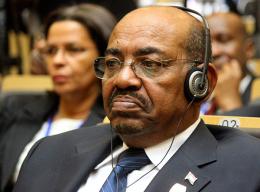
Photo: President Bashir of Sudan (AP)

 ISIS (Islamic State in Iraq and Syria) is another terrorist group that specialized in torturing people in the name of implementing Islamic Sharia Laws. Chopping heads, hands, and foot, and flogging people was another absurd way of introducing their image of Islamic State in Syria and other areas they controlled in Iraq.